

Great Writing Deserves a Great Process
Understanding the full journey from an idea to a published article helps you work with the process rather than against it.
It helps you set realistic expectations for timelines, understand the purpose of each step, and arrive at each stage prepared.
Here is the complete pipeline for a RestAwhile™ article.
Stage 1: The Idea
Every article starts with a topic idea. You might have one emerge from your own life, your reading, a conversation, a Scripture passage that won’t leave you alone.
Wherever it comes from, before you start writing, do a quick check:
✅ Does this topic fit within one of our 3 categories?
✅ Is there a clear angle, a specific insight, rather than just a general subject?
✅ Has this topic already been covered on Rest Awhile™?
If you’re unsure about a topic idea, run it by the editorial team before you write. A 2-minute check-in saves hours of redirected work.

Stage 2: The Draft
Write your first draft with full freedom. Don’t edit as you go. This is not the time for perfectionism.
Get the ideas out. Follow the structure in Article 8 (title, introduction, subheadings, body, conclusion) as a loose guide, but let the writing breathe first.
Once you have a complete first draft, step away from it for at least a few hours. Then return and read it as a reader. Not as a writer.
This distance makes the weaknesses visible in a way that’s impossible when you’re still in the middle of creating.

Stage 3: Self-Editing
Before submission, every article should go through a self-editing pass that checks for:
✅ Mission alignment: Does this feel like Rest Awhile™?
✅ Title promise: Does the body deliver exactly what the title offered?
✅ Reader-centricity: Is this written for the reader, or for the writer?
✅ Formatting: Are subheadings in H4? Are paragraphs under 5 lines? Are numbers used for lists?
✅ Sourcing: Are all factual claims linked to credible sources?
✅ Word count: Is this within the 800–1,400 word range?
✅ Proofreading: Read it out loud to catch awkward phrasing, typos, and broken sentences

Stage 4: Submission
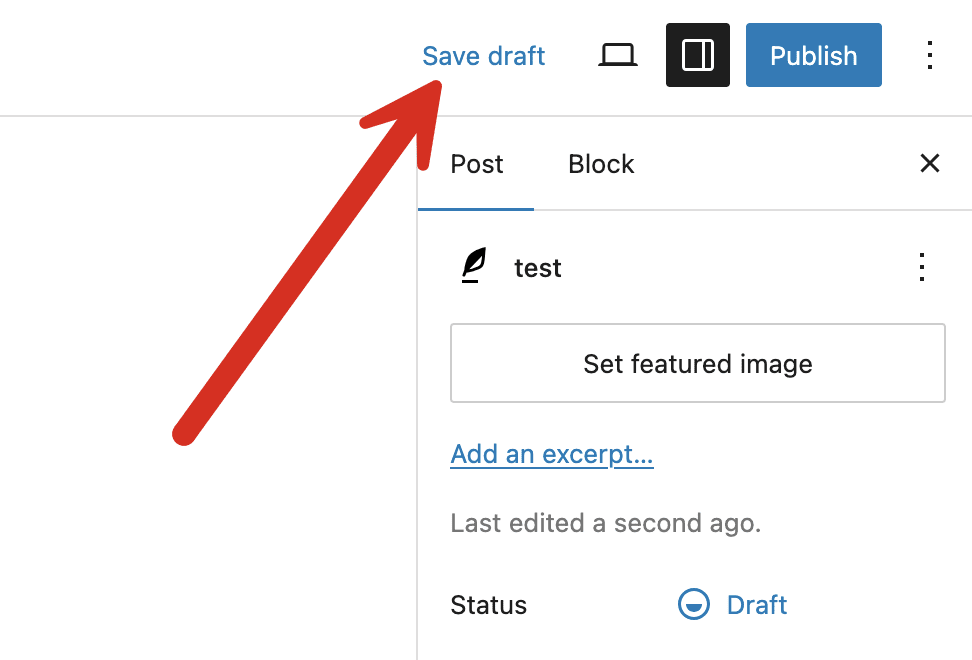
When your article is ready, leave at as “Save Draft” in WordPress (as described previously).
If you have specific notes for the editor — context about a creative decision, a question about a section you’re unsure about, or sourcing information — include them in a brief note through your team communication channel.
Submission is not the end of your involvement.
It is an invitation for collaboration.
Stage 5: Editorial Review
A member of the editorial team will review your article and respond with one of 3 outcomes:
✅ Approved: The article meets standards and will be scheduled for publication. Congratulations — your work is ready.
✅ Revisions Requested: The editor has specific feedback and asks you to revise before the article can be approved. This is the most common outcome, especially for newer contributors, and it is completely normal.
✅ Significant Rework Needed: The article needs more substantial changes before it is ready for the revision stage. The editor will provide detailed guidance on what needs to change and why.
Stage 6: Revisions
If revisions are requested, read all feedback carefully before making any changes.
Understand what the editor is asking for and why — not just make surface-level adjustments to satisfy the request.
Good revision work improves the article, not just the specific lines the editor flagged.
When you’ve made your revisions, leave the article as “Save Draft” and notify the editor. The review cycle typically takes 1-2 days.

Stage 7: Publication and Promotion
Once approved, your article will be scheduled for publication on the content calendar by the editorial team.
You’ll be notified of the publication date.
When your article goes live, the social media team will promote it across our channels — and you are also encouraged to share it through your own networks.
This is one of the ways that the whole team supports each contributor: we don’t just publish — we amplify.
Every published article is a shared win, and it gets treated that way.