

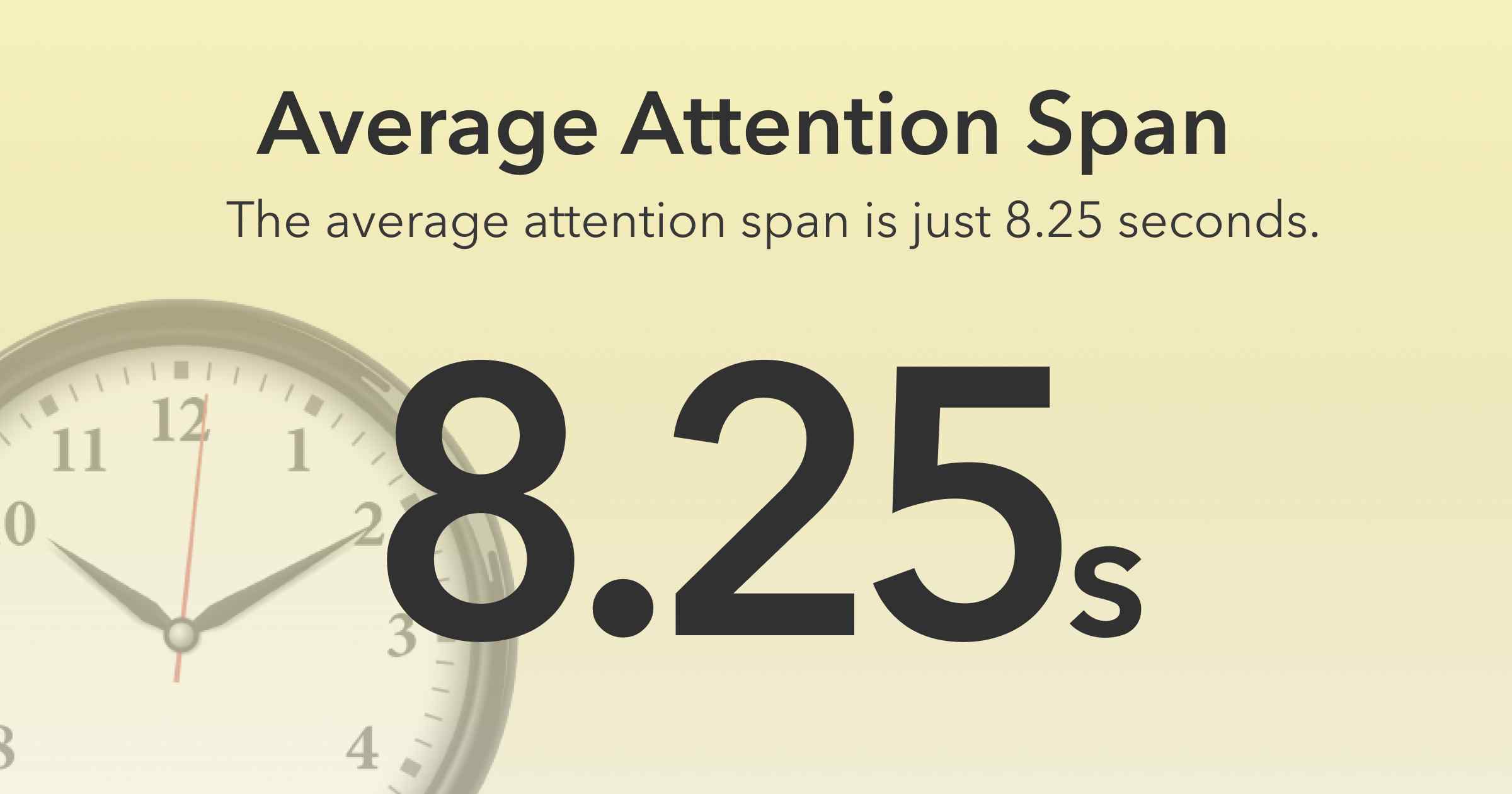
The Average Person Decides Whether To Keep Reading Within The First 8 seconds.
We live in the most competitive attention economy in human history. Every article you write is competing.
Not just with other articles, but with social media feeds, push notifications, video content, music, and the relentless pull of everything happening in the reader’s own life.
Writing that doesn’t immediately convince the reader it’s worth their time will be abandoned. Not because readers are impatient, but because they are rational.
Their time is limited, and they spend it where they feel it’s being honoured.
The good news is that the principles behind writing that captures and holds attention are learnable. Some of the best thinkers and writers of our time have spent careers studying this, and their findings are remarkably consistent.
The Power of the Hook
Anne Lamott, in Bird by Bird, talks about the importance of the first line. How it has to do a specific job.
Not to summarize the piece. Not to establish credibility. But to make the reader feel something that compels them to read the second line.
At RestAwhile™, we call this the hook. And it can take several forms:
✅ A question that the reader has been quietly asking themselves
✅ A bold, slightly unexpected statement that challenges a common assumption
✅ A statistic that reframes something familiar in a startling way
✅ A short, vivid story that drops the reader right into a moment
What all of these have in common is that they create a gap. A sense of incompleteness that the reader wants to resolve by reading on.
The hook is not a trick. It is an honest invitation into a conversation the reader actually wants to have.

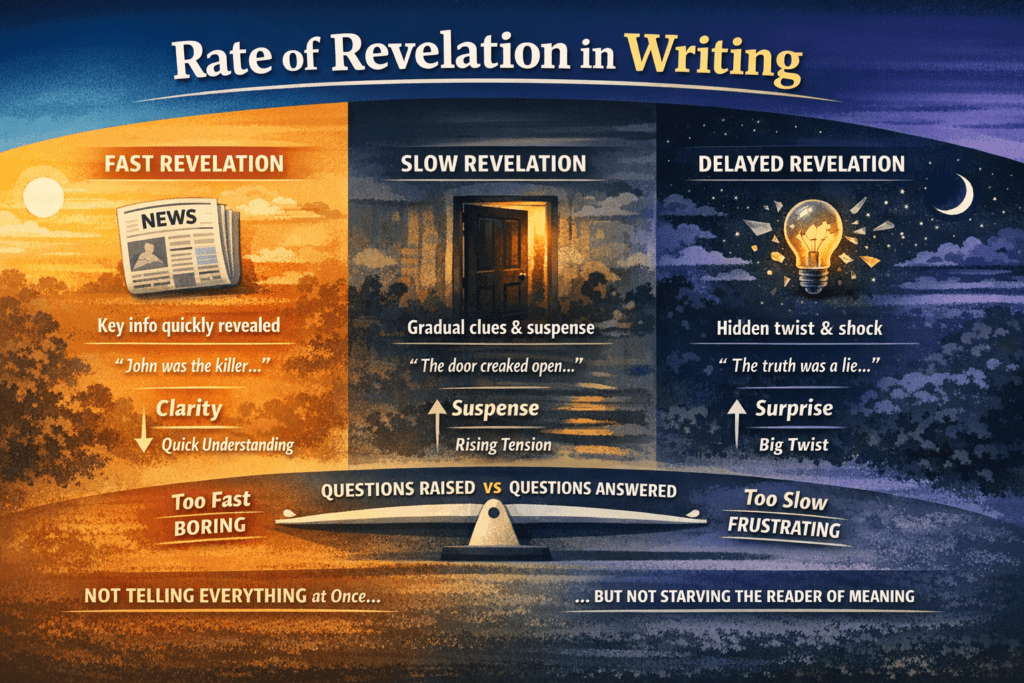
The Rate of Revelation
One of the clearest lessons from digital content writing is this: get to the point faster than you think you need to. Most writers, especially new ones, spend too long warming up.
They ease into the topic, set the scene, provide background, and only arrive at the actual substance after several paragraphs. By then, many readers are already gone.
Rate of revelation refers to how quickly you deliver value to the reader. The best writers front-load their insights.
They give the reader something real within the first 2 or 3 paragraphs, then build from there.
This doesn’t mean you rush or remove nuance. It means you trust your reader enough to start the conversation at depth.
Don’t make your reader wait for the good stuff. The good stuff is the reason they’re here. Start there.
Lessons From More Writers
Many writers open their pieces with a story, often an obscure, unexpected anecdote that seems unrelated to the main topic. By the time you understand why they started there, you’re already deeply invested.
Ann Handley, in Everybody Writes, argues that the best content is “pathologically empathetic” — meaning it is so deeply attuned to the reader’s experience that the reader feels personally understood. That kind of writing comes from doing the work of understanding your audience before you write a single sentence.
Steven Pressfield, in Nobody Wants to Read Your Sh*t, makes the uncomfortable but liberating point that readers have no intrinsic obligation to engage with what you’ve written. You have to earn their attention by making what you’ve written genuinely worth their time.
The Art and Business of Online Writing by Nicolas Cole also shares insights on why understanding these fundamental principles can help written content stand out amid the noise online.
RestAwhile™ encourages its contributors to actively learn how to improve their writing with proven strategies and to cross-share with the team in their writing experience.
Structure as a Readability Tool
Beyond the individual sentence, structure itself is an attention-keeping device.
🚨 Subheadings: break up the visual weight of normal text and permit readers to scan before they commit to reading deeply.
🚨 Short paragraphs: signal that the writer respects the reader’s cognitive bandwidth.
🚨 Bold emphasis: guides the eye to key ideas without forcing a complete re-read.
At RestAwhile™ we use all of these intentionally. Not as tricks, but as acts of hospitality, making the reading experience as accessible and pleasant as possible, so that the ideas inside have the best possible chance of landing.
Great writing is never just about the words. It is about the whole experience of reading, and every element of structure, pacing, and design either invites the reader further in or pushes them away.